The U.S. Army and the U.S. Navy are both testing Access under formal research agreements
The Army and the Navy are about to put our portable RO system through its paces. Here's what that means, and why it matters
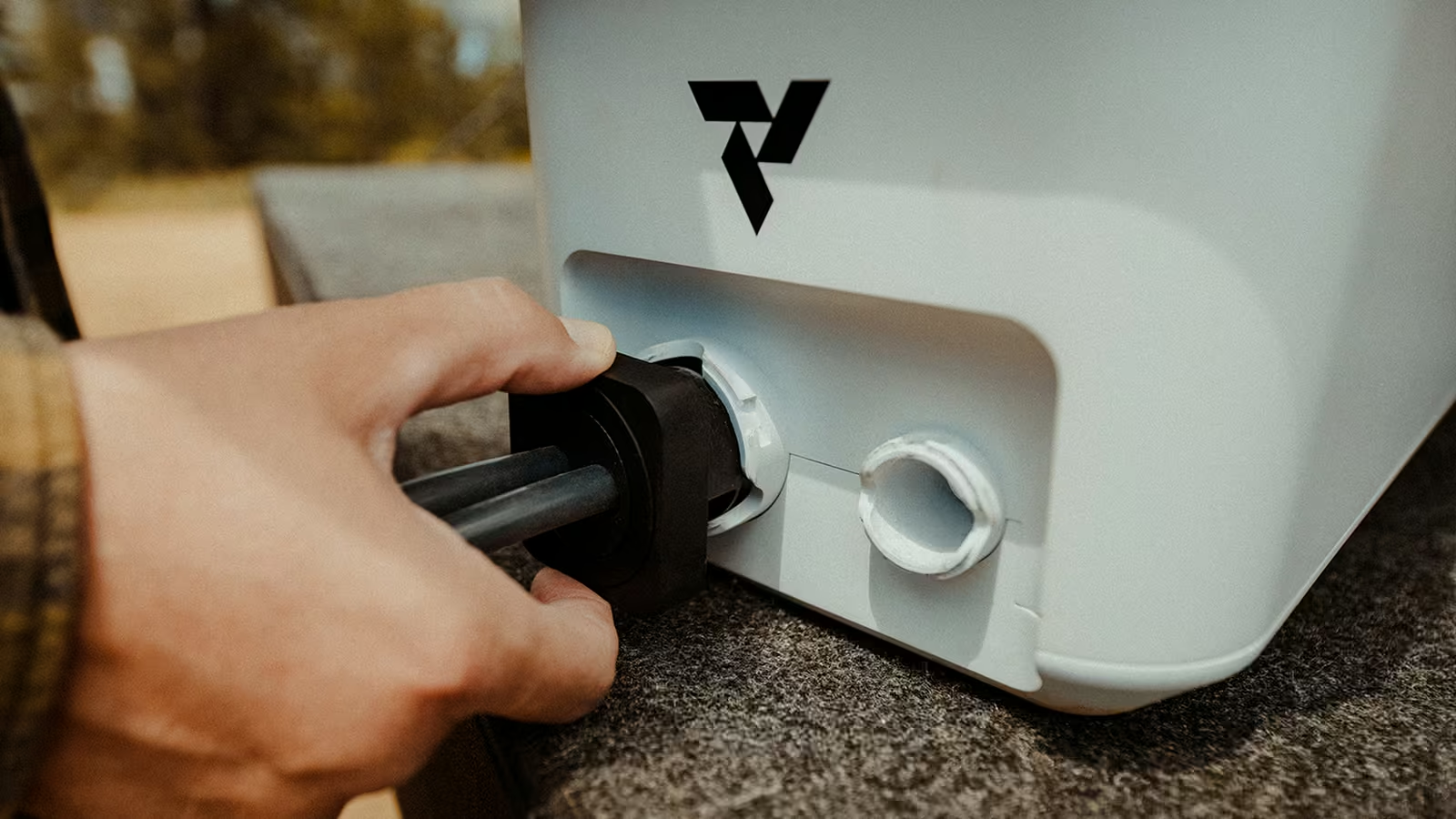
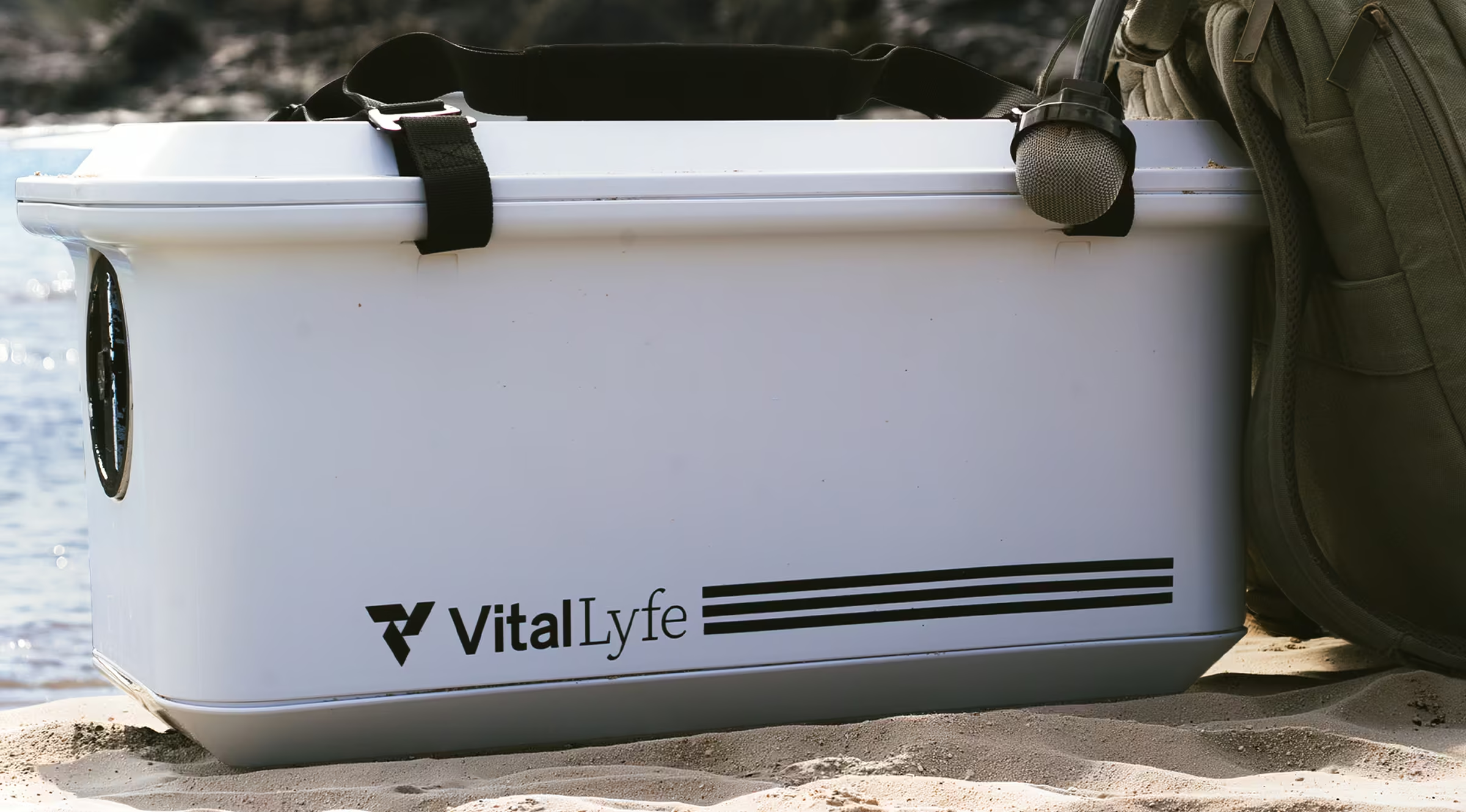
Water is heavy. Ask anyone who has ever carried it. Now imagine moving it for an entire military unit, in a remote place, with no supply line to count on. That's the problem two U.S. military labs are working on, and they're testing Access, our 25 lb portable desalinator, to see if it can help solve it. We've signed two CRADAs, one with the Army and one with the Navy.
To understand why Vital Lyfe is being considered, let’s take a closer look at the process Access has to undergo to ensure it’s the right piece of technology for such a monumental task.
Let’s start with a bit of education…what’s a CRADA?
A Cooperative Research and Development Agreement lets a federal lab and a private company work together on a technology. It isn't a grant, and it isn't a contract. The government can't hand a company funding under a CRADA.
Here's how it works instead: we supply the equipment, and the lab supplies independent testing, facilities and expert feedback. For a young company, that trade is worth more than a check. We get our system tested by people whose job is to keep soldiers, sailors and Marines supplied with clean water in the hardest places on earth, and that kind of validation is tough to buy.
One CRADA is a vote of confidence. Two, with different services and different test environments, is a serious validation program.
There’s a lot of reasons why the military cares.
The Department of Defense needs vast quantities of drinking water to support operations in remote places, and water is one of the heaviest things a deployed unit has to move. Existing solutions are, in the Army's words, "bulky or static and difficult to use.”
Both services want the same thing: a portable system that makes clean water from seawater or brackish water right where it's needed, without much size, weight or power.
Our two partners will be the first to bring us into this specialized world.
DEVCOM Soldier Center, Natick, Massachusetts. This is the Army lab behind much of what a soldier carries, wears and eats in the field. The lab spotted a capability gap in clean water production for prolonged operations, continuous soldier hydration and austere medical care. It wanted to see how a modular desalination system stacks up against the current state of the art. The plan: we build and ship at least two identical Access units to the Army, along with our full technical specifications and performance data. The Army's Emerging Materials Development Branch then evaluates them in operational conditions for performance, form, fit and function.
Our second CRADA is with the Naval Facilities Engineering and Expeditionary Warfare Center, or NAVFAC EXWC, in Port Hueneme, California. The Naval Facilities Engineering and Expeditionary Warfare Center is the Navy's engineering center for expeditionary operations. Think of the bases, camps and logistics that Marines and Navy construction battalions set up when they land somewhere with no infrastructure. The work happens in two stages. First, NAVFAC EXWC tests our units in a lab environment to establish hard numbers for water production rate, water quality, energy consumption and maintenance intervals. Then the units go into multiple military exercises to operate in a realistic field environment, where the Navy will gather direct feedback from the people using them on operation, packaging, carrying and maintenance.
The Army program, signed in 2025, establishes a partnership with DEVCOM Soldier Center in Natick, Massachusetts. The Navy program, signed in August 2026, establishes a partnership with NAVFAC EXWC in Port Hueneme, California.
We’re excited about being the solution for some of the most grueling conditions and look forward to seeing Access out in the field doing what it’s meant to do: provide easy access to clean water.